
Zèya
The Zéya AppLifestyle
3.851.00 Reviews
- Version
- 4.0.3
- Installs
- 10.00K
- Age Rating
- Mature 17+
Screenshots
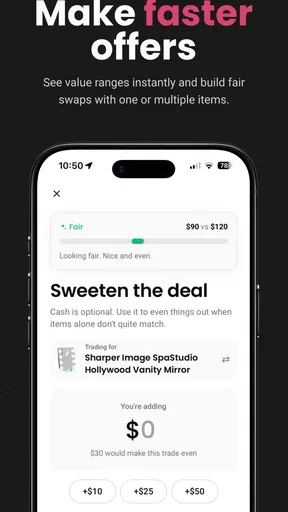

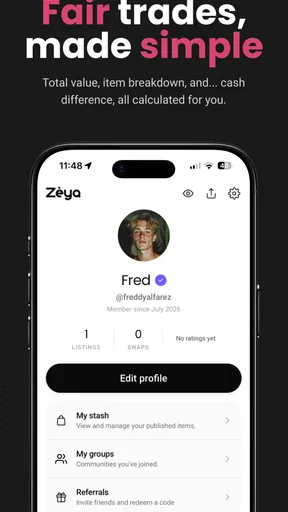

Our Review of Zèya
 Analysis by Appyee
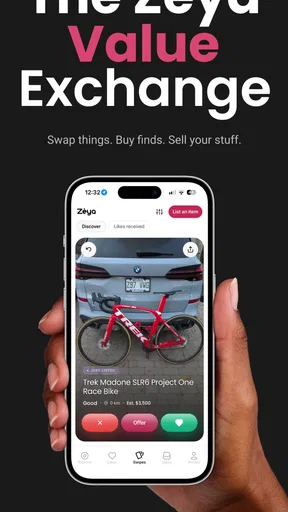
I approached Zèya as a community-focused lifestyle app rather than another general social network. Its central idea is simple: people can exchange things, save money, and stay connected with others around them. That combination gives it a practical purpose, especially for anyone who prefers reusing items or finding value within a local circle instead of buying everything new.
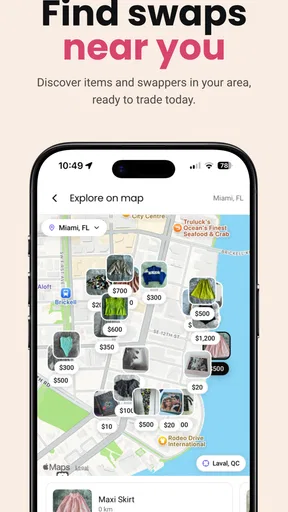
My first impression is that Zèya works best when you already have a community in mind. It is not the kind of app I would open purely for endless entertainment. Its usefulness depends on whether people nearby are willing to participate, list things, respond to requests, and keep conversations moving. When that social layer is active, the app feels purposeful. When it is quiet, the experience can feel limited even if the idea itself is appealing.
The app is free, belongs to the lifestyle category, and is developed by The Zéya App. It is intended for mature users aged seventeen and above, which is worth remembering before recommending it to younger members of a household. Its store presence shows an average rating of 3.8 from around two hundred ratings, with over ten thousand installs, so it has reached a real audience while still feeling like a relatively small community product rather than a massive mainstream platform.
How Zèya feels in everyday use
I find Zèya most useful when I treat it as a shared household resource rather than a personal shopping feed: one person can notice something worth passing on, while another may have a need the rest of the household has not thought to mention. In the next section, I’ll focus on the small boundaries that help keep that kind of shared use clear, especially when different people have different expectations about what to offer or request.
A practical community tool, not a replacement for every marketplace
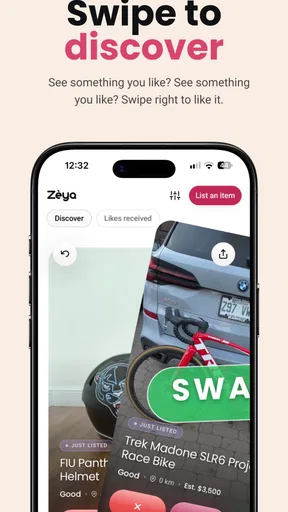
The most useful way to think about Zèya is as a meeting point for local exchange and community interaction. I would use it when I had something useful that I no longer needed, when I wanted to look for an item before spending money, or when I wanted to participate in a more personal form of sharing. The emphasis is not simply on listing a product and waiting for a transaction. The appeal comes from combining exchange with connection.
That distinction matters because the usual alternatives tend to focus on one purpose. A conventional shopping app is better when I want a predictable purchase, clear delivery options, and a large selection. A standard classified marketplace may be stronger when I want to reach the widest possible audience quickly. A neighborhood messaging group can be more immediate for people who already know one another, but it often becomes difficult to search or organize. Zèya sits between those experiences: more structured than a casual group chat, but more community-oriented than a large commercial marketplace.
For me, the strongest use case is an item that still has value but does not justify the effort of selling through a large platform. A child’s outgrown equipment, spare household supplies, books, decorations, or an appliance that is sitting unused could make sense in a local exchange setting. The benefit is not only financial. Reusing something nearby can reduce waste and avoid the inconvenience of packing and shipping.
A realistic scenario for using it
Imagine that I am clearing a storage cupboard and find several items that are perfectly usable but no longer fit my needs. Instead of throwing them away, I can use Zèya to bring them to the attention of people in my community. Someone else may be looking for exactly those things, while I gain space and avoid the hassle of arranging a distant sale.
The reverse situation is just as important. If I need something for a short-term project, a move, or an occasional household task, I can check the community before buying a new version. That is where the app’s saving angle becomes practical. The saving does not come from a permanent discount system; it comes from making better use of things that already exist within reach.
There is also a social advantage in this scenario. A successful exchange can create a reason to interact with neighbors or community members who might otherwise remain strangers. That makes Zèya more personal than a standard retail app, although it also means the quality of the experience depends heavily on how considerate and responsive participants are.
What I would do before posting anything
I would prepare a listing carefully rather than treating the app like a quick dumping ground. A clear description, honest condition notes, and realistic expectations can prevent unnecessary back-and-forth. I would also decide in advance whether I am offering, swapping, or looking for something, because clarity makes a community exchange easier for everyone involved.
One useful habit is to group related items thoughtfully. If several objects belong together, presenting them as a practical bundle may be more helpful than scattering them across multiple posts. On the other hand, valuable or highly specific items may deserve their own description so that the right person can find them without confusion. This kind of organization is a small step, but it is especially important in a community app where attention is more limited than on a huge marketplace.
I would also keep communication inside a sensible routine: check responses at a time when I can reply properly, confirm the arrangement before setting aside an item, and avoid assuming that interest equals commitment. That is not a criticism unique to Zèya; it is simply the reality of peer-to-peer exchange. The app can help people connect, but it cannot make every participant equally reliable.
The current version and what it suggests
The current version is 4.0.3, which indicates that Zèya has moved beyond an initial experiment and is being maintained as a continuing product. I see that as a positive sign for anyone considering joining now. A version number at this stage suggests an evolving app rather than a one-off concept, although the number alone does not tell me which parts have changed or how frequently improvements arrive.
The app was released on November 19, 2024, so its development history is still relatively recent. That helps explain why the experience may feel like it is finding its shape. New community apps often need time to establish useful habits: people must learn what belongs there, how to describe exchanges, and why they should return after their first interaction.
For existing users, the move to the current version is most meaningful if it makes participation feel more dependable or easier to understand. Even small refinements can matter in an exchange app. A smoother path from discovering an item to contacting its owner can remove hesitation. Clearer organization can make the difference between a useful community feed and a collection of posts that are easy to overlook.
I would not treat the version number as proof that every rough edge has disappeared. Product evolution is not the same as completeness. Zèya can still be developing its identity, and users should approach it as a growing community rather than a fully mature alternative to every established marketplace.
Who is likely to get the most from it
Zèya is a good fit for people who enjoy practical reuse and are willing to participate rather than simply browse. It may suit students, families, people moving home, environmentally conscious users, and anyone trying to reduce unnecessary spending. It can also appeal to someone who dislikes the impersonal feeling of large resale platforms and prefers a smaller, more human setting.
The app is particularly interesting for users who have a steady flow of useful items to pass on. If I regularly declutter, repair, swap, or search for second-hand solutions, I have more reasons to return. Repeated participation is important because the value of a community platform usually grows through familiarity and trust.
I would be more cautious about recommending it to someone who wants instant nationwide reach, guaranteed availability, or a highly standardized buying process. If the goal is to order a specific product quickly, a regular shopping service is probably better. If I need a formal sales workflow, shipping support, or a large audience, a specialized marketplace may be the more efficient choice.
Three details that affect the experience more than the summary suggests
First, the community scale is both an advantage and a limitation. A smaller network can make exchanges feel more relevant because the people involved may be closer to the same local context. However, it also means I should not expect every search to produce a result. The app becomes more useful when I treat it as a place to build ongoing participation, not as a search engine with unlimited inventory.
Second, timing matters. A good item can be missed if I post when few community members are checking the app, while a request may work better when people have enough time to respond. I would use Zèya for needs that allow some flexibility, not for something I must obtain immediately. This is an important trade-off compared with a commercial service that can often provide a clearer delivery promise.
Third, the social connection changes how I judge a successful exchange. On a standard marketplace, I might measure success by speed and price alone. Here, a fair description, polite communication, and a smooth handoff are part of the value. Users who see these interactions as a nuisance may prefer a more transactional alternative. Users who appreciate community cooperation may find the extra human element worthwhile.
Where the app still needs patience
The biggest potential friction is the dependence on participation. No community app can create a lively local network by itself. If few people in my area use Zèya, the app may offer less immediate value than its concept promises. That is not a flaw in the basic idea, but it is a practical barrier that should shape expectations before downloading it.
Another limitation is that peer-to-peer exchanges require personal judgment. I would think carefully about what I share, how I arrange meetings, and whether an offer seems reasonable. The app may help people discover one another, but I would still use ordinary caution when communicating with someone I do not know. For higher-value items or sensitive situations, a more formal service may offer greater reassurance.
There is also a difference between saving money and finding the exact thing I want. Zèya can support economical choices, but it cannot promise the selection, condition, or consistency of a retailer. I would be comfortable using it for flexible needs, where a second-hand or swapped item is acceptable. I would not rely on it when specifications, warranties, or guaranteed stock are essential.
The mature age rating also narrows its audience. Families should not assume that the app is suitable for children simply because its subject is everyday sharing. Anyone introducing it into a household should respect the stated age classification and make sure younger users are not using it independently.
What I would like to see as it develops
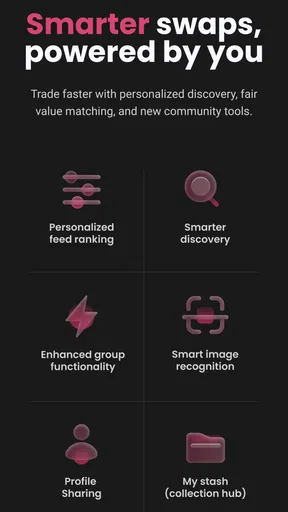
As Zèya continues evolving, I would pay attention to how well it helps a community become active rather than merely available. The most important signs would be easier discovery of relevant exchanges, clearer communication around arrangements, and a stronger sense that returning users can build dependable habits. Those improvements would matter more to me than adding features just for the sake of making the app look busier.
I would also watch how the app balances openness with trust. A community platform needs enough participation to remain useful, but it also benefits from interactions that feel respectful and manageable. If growth makes the experience noisy or impersonal, it could lose the quality that separates it from a conventional marketplace. If the app remains too closed, new users may struggle to find value.
The current release gives potential users a reasonable point of entry, but I would judge its progress through everyday usefulness: Can I find a relevant exchange? Can I describe my own item clearly? Can I understand what happens next? Can I return later and still recognize the community? Those questions are more revealing than a version label on its own.
My recommendation after using it
I see Zèya as a thoughtful option for people who want exchange and community to exist in the same place. Its free access lowers the barrier to trying it, and its lifestyle focus gives it a clear purpose: make better use of what people already have while creating local connections around that activity.
I would recommend installing it if I lived in an area where neighbors or community groups are open to swapping, sharing, and passing items along. I would start with a modest request or a useful item to offer, then return long enough to see whether the local network becomes active. That is a better test than judging the app after a single quiet visit.
I would skip it if I needed a guaranteed purchase, a huge catalog, or a formal marketplace experience. In those cases, a retail app or established classified service would probably save time. But if I value reuse, flexible exchanges, and the possibility of turning ordinary household items into meaningful community interactions, Zèya is worth trying with realistic expectations.
Overall, I think the app’s promise lies less in any one exchange and more in the habit it encourages. The current version shows that The Zéya App is continuing to shape the product, while its relatively young community means the experience may vary from one place to another. I would keep an eye on how that network grows. For the right user, the combination of saving, swapping, and connecting feels genuinely useful; for everyone else, the local participation requirement may remain the deciding obstacle.
Verdict
Strengths of Zèya
- Simple interface makes core features easy to find.
- Useful for managing daily tasks in one place.
- Quick setup with minimal configuration required.
- Clean design keeps navigation comfortable on smaller screens.
- Regular updates can improve stability and add useful features.
Limitations of Zèya
- Some features may require an account or personal information.
- Performance can vary between older Android and iOS devices.
- Notifications may become distracting if not customized.
- The free version may include limits or promotional content.
- Help resources may be limited for troubleshooting uncommon issues.
Similar Picks in This Category
View All
SmartThings
Samsung Electronics Co., Ltd.4.6

Google Home
Google LLC4.0

Pinterest4.2

Astrotalk - Talk to Astrologer
Astrology & Horoscope4.7

My Verizon
Verizon Consumer Group4.5

Samsung Wallet (Samsung Pay)
Samsung Electronics Co., Ltd.4.1
Frequently Asked Questions
What is Zèya, and what can I use it for?
Zèya is an app designed to provide users with a focused digital experience, although its exact tools and purpose may depend on the version available for your device. Before downloading, review the official store description to confirm whether it matches your needs. Check the listed features, supported devices, account requirements, and any regional restrictions, since availability and functionality can vary between Android and iOS.
Is Zèya free to download and use?
Zèya may be available as a free download, but some features can require in-app purchases, a subscription, or additional paid content. I recommend checking the pricing section on Google Play or the App Store before installing it. Pay attention to trial periods, automatic renewal terms, and whether essential functions are locked behind a payment, especially if you prefer apps without recurring costs.
Does Zèya require an account or personal information?
Depending on the features you want to use, Zèya may ask you to create an account or provide information such as an email address, name, or preferences. Review the permissions requested during installation and read the developer’s privacy policy before proceeding. Avoid granting access that seems unrelated to the app’s purpose, and check whether you can use the main features without registering.
Is Zèya safe to install on Android and iOS devices?
The safest way to install Zèya is through its official Google Play or Apple App Store listing rather than downloading modified or unofficial files from third-party websites. Before installing, verify the developer name, recent updates, user reviews, and requested permissions. Keep your operating system updated as well, because compatibility and security can depend on the device software version.
What should I check before downloading Zèya?
Before downloading Zèya, confirm that your phone or tablet meets the listed operating-system requirements and has enough available storage. It is also worth checking the latest update date, review scores, privacy disclosures, subscription details, and whether the app works in your country. If the app relies on an internet connection, consider your mobile data usage and test it on a reliable Wi-Fi network.
